

There is a number hiding in every eCommerce dashboard that explains more about the business’s future than any ROAS figure: the percentage of customers who ever buy a second time.
For most D2C brands it sits somewhere between 15% and 25%. Which means the brand pays full acquisition price for a customer, wins them, and then, three times out of four, never sees them again. Imagine any other asset with a 75% abandonment rate being called a growth strategy.
Rising ad costs did not create this problem. They just removed the anaesthetic.
The arithmetic nobody argues with
The economics of retention are almost embarrassingly lopsided. The second purchase carries no acquisition cost, converts at multiples of any cold audience, and typically arrives at a higher order value. Move repeat rate from 20% to 30% and you have raised revenue by double digits without spending an additional rupee on ads, while simultaneously raising the CPA you can afford to pay, which makes your acquisition more competitive too.
That is the strategic point most brands miss: retention is not the alternative to acquisition. It is what makes aggressive acquisition affordable. The brand with the strongest repeat economics can outbid everyone in the auction and still bank more profit. Retention, done properly, is an acquisition weapon.
From hoping to engineering
The difference between brands with 20% repeat rates and those with 40% is rarely product quality. It is that one of them leaves the second purchase to chance and the other engineered it.
An engine, not a newsletter. Four systems, each with a defined job.
1. Onboarding: the first 30 days decide everything
The window between first delivery and first repurchase decision is the most valuable attention you will ever hold, and most brands fill it with silence or a lazy “10% off your next order”.
Purposeful onboarding sells the outcome, not the next transaction: how to use the product for best results, what to expect by week two, which product pairs with it and why. A customer who succeeds with purchase one has been given a reason for purchase two that no coupon can match.
2. Replenishment: arrive before the empty bottle
If your product depletes, skincare, supplements, coffee, consumables of any kind, your repeat engine has a metronome. Calculate actual usage cycles from your order data, then land the reminder a few days before run-out: helpful, precisely timed, one click from reorder.
This is the highest-ROI automation in eCommerce, and the majority of brands that could run it simply don’t. For everyone else, the same logic applies through seasonal cycles, complementary products and upgrade paths.
3. Loyalty: reward the behaviour you want repeated
Most loyalty programmes fail because they are discount schemes wearing a costume. Points-for-rupees teaches customers to think in rupees, the exact instinct you are trying to retire.
Programmes that work reward identity as much as spend: early access to launches, member-only products, tiers that confer status, points for reviews and referrals, the behaviours that build the brand. The goal is a customer who would feel a small loss leaving you, not one holding a voucher.
4. Win-back: churn is a schedule, not a mystery
Every product has a natural repurchase rhythm, and every customer who exceeds it is quietly churning. Define that threshold from your data, at 60 or 90 or 120 days, and act before the relationship goes cold: a check-in, a reason to return, and only as a final act, an incentive. The sequence matters; leading with the discount trains the lapse.
The data underneath
None of these systems run on guesswork. They run on the first-party data foundation we have written about before: unified purchase histories, consented channels (email and WhatsApp, in India especially, are a formidable pair), and segmentation by observed behaviour rather than demographic fiction.
Start simpler than you think: one clean customer view, three automated flows, weekly reading of two numbers, repeat rate and time-to-second-purchase. Sophistication can come later; consistency cannot.
The compounding difference
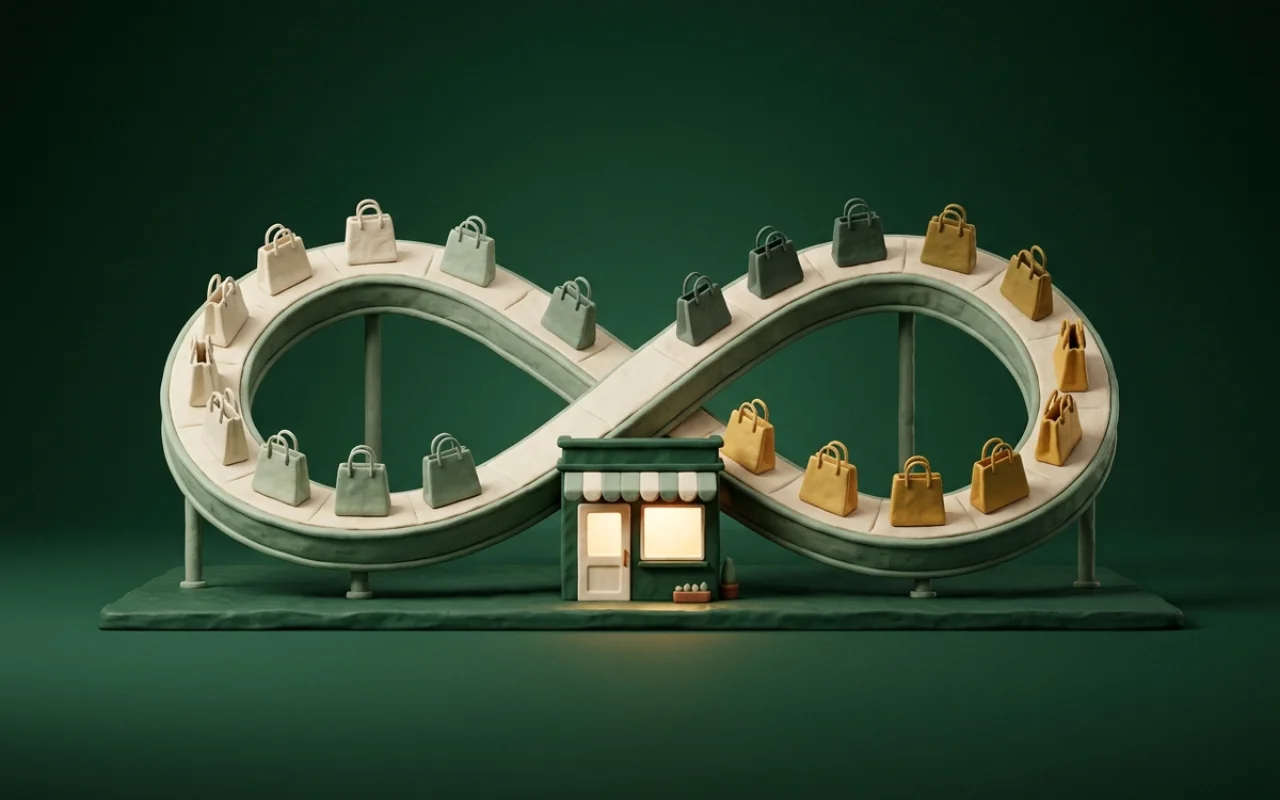
Acquisition-only brands live on a treadmill that speeds up every quarter: costs rise, audiences fatigue, and each month begins at zero. Retention-led brands walk up an escalator, every cohort they acquire keeps paying into the next quarter’s baseline.
Same ad budgets, same platforms, completely different trajectories. The difference is a decision: treating the customers you have already won as the growth channel they always were.
The cheapest customer you will ever acquire is the one you already have. Build the engine that proves it.
Da Curious Media builds retention systems, CRM, automation, email and WhatsApp journeys, that turn first orders into durable revenue. If your repeat rate is a number you have to look up, we should talk.